
How Do You Promote Instagram Posts for Maximum Reach
Learn exactly how do you promote Instagram posts with a clear, step-by-step guide for both organic growth and paid boosts that deliver real results.
instagram promotion, boost instagram posts, instagram ads, social media marketing, instagram reach
Most advice on promoting Instagram posts starts with the wrong instruction: press Boost post and wait for reach. That button only opens the buying process. It doesn’t decide whether your post should attract buyers, leads, profile visitors, or inexpensive attention.
The better answer to how do you promote Instagram posts is to treat promotion as paid distribution inside Meta’s advertising system. Choose the business outcome first, match the audience and placement to that outcome, then measure what happens after the click. A large audience can create impressive numbers while producing no commercial value.
Table of Contents
- Why Instagram Promotion Is Not What Most People Think
- Setting Up Your Instagram Promotion Workflow
- Choosing the Right Objective and Audience Strategy
- Creating and Testing High-Performing Creative Assets
- Measuring Success Beyond Basic Likes and Views
- Scaling Promotion for Multi-Account Management
Why Instagram Promotion Is Not What Most People Think
Instagram promotion isn’t just an extension of your follower base. In January 2025, Instagram’s advertising tools could potentially reach 1.74 billion users worldwide, equal to 21.3% of the global population and 26.9% of people aged 13 and above, according to Instagram advertising audience data. That figure describes a potential advertising audience, not the number of people guaranteed to see your post.
The distinction matters. Followers, total users, reach, impressions, clicks, and conversions are different measures. A promotion can expand delivery beyond your followers, but Meta still needs an objective, audience, budget, duration, placement, and suitable creative to find people likely to respond.
Practical rule: Never approve a promotion until you can finish this sentence: “I want this post to generate more…”
The answer might be qualified leads, purchases, website visits, profile visits, or useful engagement from a defined audience. If the answer is merely “more reach,” you’re buying exposure without knowing what exposure should accomplish.
Organic performance can help you identify a promising asset, but it doesn’t prove commercial intent. A Reel may attract views because it’s entertaining, while a carousel with fewer interactions may explain a product well enough to generate sales. If your immediate problem is weak organic distribution, review practical guidance on growing Instagram Reel views, then judge paid promotion separately.
Meta’s infrastructure supports local campaigns and international distribution, which is useful for brands serving multiple markets. It also creates a trap: advertisers can confuse scale with relevance. Promotion works when paid delivery puts a clear message in front of people who have a plausible reason to act.
Setting Up Your Instagram Promotion Workflow
Before spending money, fix the operating basics. Use an Instagram Business account connected to the correct Meta ad account, then confirm that the destination page, offer, and tracking are ready. A promotion shouldn’t be your first test of whether the landing page works.
Start with a post or Reel that has shown a useful organic signal. Look for saves, shares, profile visits, or link clicks that sit above the account’s normal baseline. Organic validation doesn’t guarantee paid success, but it gives you evidence that the creative has earned some attention before you add budget.
Build the promotion in a controlled order
-
Choose the asset. Select the post that supports a clear business action, not automatically the one with the most likes.
-
Connect the ad account. Check the account, payment method, permissions, and destination before you publish.
-
Select the objective. Choose engagement, traffic, leads, sales, or another available outcome based on what you need to happen after delivery.
-
Define the audience. Use location, age, interests, customer data, or retargeting logic only when those settings reflect your actual buyer.
-
Set budget and duration. Treat the first launch as a test. Give it enough room to produce useful evidence, but don’t scale before the conversion signal is trustworthy.
-
Review every detail. Check copy, creative crop, CTA, URL, tracking parameters, placement, and exclusions.
For a straightforward walkthrough of the platform flow, Trendy’s 2026 Instagram promotion guide can supplement the operational checklist. The button sequence is easy. The decision-making around that sequence is where advertisers usually lose money.
Keep one major variable stable during each test. If you change the audience, creative, landing page, and objective at once, you won’t know what caused the result. Use a dedicated UTM structure that identifies the platform, campaign, audience or ad set, and creative, so analytics and CRM data can be reconciled with Meta’s reporting.
Choosing the Right Objective and Audience Strategy
Choose the objective according to the business action you need, not the metric Meta can generate cheaply. A post built to start conversations needs a different delivery goal from one intended to sell. Calling both “awareness” hides the decision that determines whether promotion produces revenue or vanity metrics.
| Business need | Suitable direction | What to judge |
|---|---|---|
| Conversation or community response | Engagement | Meaningful comments, shares, saves, and profile actions |
| Website visits | Traffic | Outbound CTR, landing-page views, and downstream behavior |
| Leads | Lead generation or conversion-focused traffic | Cost per qualified lead and lead quality |
| Purchases | Sales or conversion-focused delivery | Cost per purchase, revenue, and return on ad spend |
| Existing interest | Retargeting | Conversion efficiency and frequency |
Use the campaign objective framework to define the choice before launch. Ask which result moves a customer closer to revenue. Cheap engagement is a poor outcome if the offer requires qualified leads or purchases.
Audience fit beats broad delivery
Instagram’s cited 2023 advertising demographics placed approximately 61% of its advertising audience between ages 18 and 34, while fewer than 7% were over 55, according to industry reporting on Instagram’s business audience. Use those figures for platform context, not as a substitute for customer research. If buyers are older, local, professional, or otherwise narrow, configure the audience around that reality.
Select the path that matches the relationship:
- Prospecting: Reach people who fit the buyer profile but have not interacted with the brand.
- Retargeting: Re-engage visitors, video viewers, profile visitors, or previous engagers with a stronger next step.
- Customer expansion: Use customer signals to find people with similar commercial characteristics when the account and available data support it.
Instagram attracts serious commercial competition. More than 200 million businesses used Instagram’s advertising platform in 2023, and 83% of users reported discovering new products or services on Instagram, according to Instagram’s business reporting. Paid placement cannot rescue a vague offer. Match the hook to a defined audience, then give that audience a clear reason to act now. A broad audience may deliver cheap reach while producing little qualified demand. Judge the setup by the quality of the action that follows the impression.
Creating and Testing High-Performing Creative Assets
One post rarely works equally well in every placement. Build a small creative system around one offer, then adapt the presentation to the way people consume each placement.
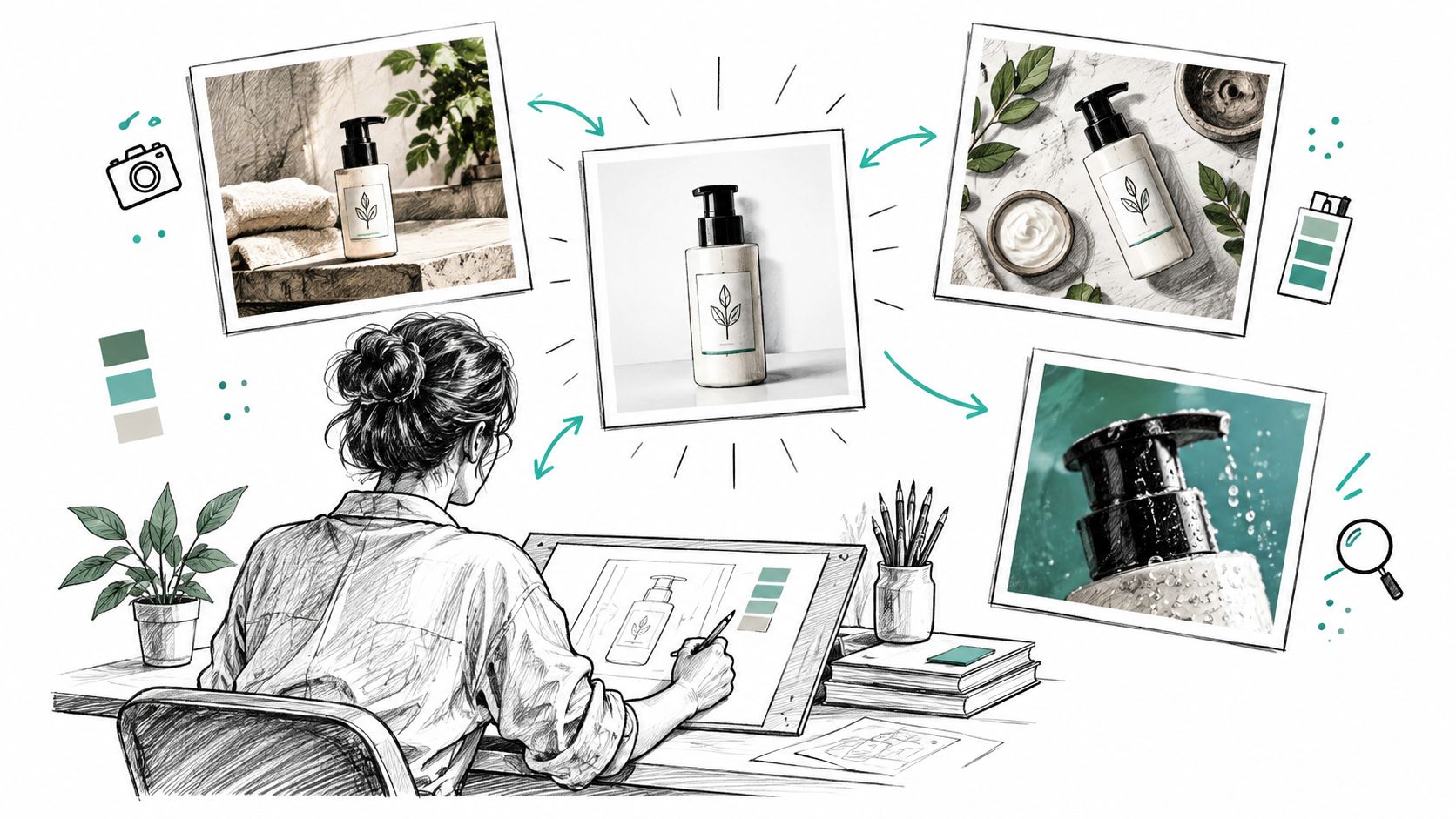
Start with three versions:
- Vertical Reel or Story: Put the problem, promise, or visual interruption in the opening moment. Use captions, clear branding, safe-zone placement, and a visible CTA before the final frame.
- Carousel: Put the strongest value proposition on the first card. Use later cards to explain benefits, answer objections, show features, or clarify the next step.
- Static creative: Use a direct visual and simple message for retargeting or audiences that need less explanation.
Keep the primary claim, CTA, destination, and audience definition stable. If the Reel uses a different promise from the carousel, you’re testing messaging and format together, which makes the result difficult to interpret.
Design for intent, not applause
A Reel can win on views and still lose on sales. A carousel can receive fewer impressions while generating stronger qualified traffic. Track thumb-stop or three-second view rate, hold rate, outbound CTR, cost per landing-page view, conversion rate, frequency, and comments that reveal genuine qualification or confusion.
When production volume becomes the constraint, tools that scale ad creative production can help teams create consistent variants without changing the offer accidentally. The goal isn’t to produce endless versions. It’s to isolate the format and hook that bring commercially useful attention.
Use the same discipline when comparing placements. Feed CPM has been reported at about $7.68, compared with $6.25 for Stories, while reported Feed CTR ranges from 0.22% to 0.88% and Stories CTR from 0.33% to 0.54%, according to Meta advertising benchmark data. These are directional benchmarks, not promises. A cheaper impression isn’t automatically a better impression.
This video provides another practical perspective on producing social creative for paid distribution:
Refresh creative when frequency rises while CTR falls or CPA increases. Don’t shift the entire budget because one placement produces cheap engagement. Use the breakdown as diagnostic evidence, then confirm the commercial outcome before reallocating.
Measuring Success Beyond Basic Likes and Views
Likes are feedback, not a business verdict. If the promotion exists to generate revenue, the report must connect delivery to a qualified action and, where possible, to actual revenue.
Install the tracking foundation before launch. Use Meta Pixel or Conversions API where appropriate, add a consistent UTM structure, and make sure the landing page records the same event your campaign optimizes toward. Without that connection, platform clicks and analytics sessions may not reconcile, and your team will argue over dashboards instead of fixing performance.
Read the funnel in order
- Reach and impressions: Tell you how much delivery occurred. They don’t tell you whether the audience cared.
- Frequency: Shows how often people encountered the promotion. Rising frequency with weaker response can signal fatigue.
- CTR: Indicates whether the creative and offer earn the click.
- Landing-page conversion rate: Shows whether the destination continues the promise made in the post.
- Cost per qualified lead or purchase: Connects spend to the outcome that matters.
- Return on ad spend: Helps determine whether revenue justifies the media cost.
Reported directional benchmarks place Instagram advertising CPC around $0.50 to $2.00 and conversion rate around 1% to 2%, according to the Instagram promotion testing guidance. Treat those ranges as context, not a target. Market, offer, audience temperature, placement, and tracking quality can move results materially.
Your decision rule should be simple. Don’t scale during the first learning period. Increase budget gradually only when conversion efficiency stays within your target CPA or ROAS, and pause when the evidence shows that the promotion can’t reach that threshold.
For a broader measurement vocabulary, use this guide to ad performance metrics. It helps separate attention metrics from diagnostic metrics and outcome metrics, which prevents teams from celebrating a high view count when qualified actions are falling.
Scaling Promotion for Multi-Account Management
A single-account promotion is manageable with a careful checklist. Multiple accounts create a different problem: consistency, permissions, timing, and accountability become as important as targeting and creative.
Create one operating record for every promotion. Log the account, campaign objective, audience, creative version, budget, launch time, rationale, and result. When someone pauses, relaunches, or changes a budget, record the decision and outcome instead of burying it in a chat thread.
Turn judgment into a repeatable system
Use a shared naming convention and a common UTM structure across clients. Store the approved offer, landing page, conversion event, and audience definition with the campaign plan. That lets a media buyer compare like with like without rebuilding context from fragmented spreadsheets.
A practical multi-account workflow looks like this:
- Validate creative organically or through a controlled initial test.
- Launch with the correct objective and tracking.
- Review delivery, efficiency, and conversion quality.
- Record the decision, including why budget changed or remained stable.
- Scale only when the account meets its defined efficiency rule.
Teams managing several networks can also evaluate multi-account management workflows when manual platform switching starts slowing decisions. AdCrunch is one option for connecting Meta, TikTok, and Google Ads accounts, querying performance, executing supported Meta changes, and keeping a permanent activity log. Its controls include paused creations, no hard deletes, and recorded change details, which suit teams that need operational guardrails rather than another reporting dashboard.
Promotion becomes scalable when every launch is a documented test and every change has an owner, reason, timestamp, and measurable result. That’s how you protect budgets while giving good creative enough room to prove itself.
AdCrunch helps teams manage paid Instagram activity through connected Meta accounts, with campaign operations, budget controls, performance queries, and a permanent activity record for changes. If you’re managing several client or brand accounts, visit AdCrunch to see how a controlled, auditable workflow can replace scattered promotion tasks.